.avif)
.png)
This project explores the design and development of a smart helmet for daily commuters, aimed at reducing accidents caused by blind spots. The helmet integrates real-time blind-spot detection and alerts, offering riders a safer and more confident driving experience.
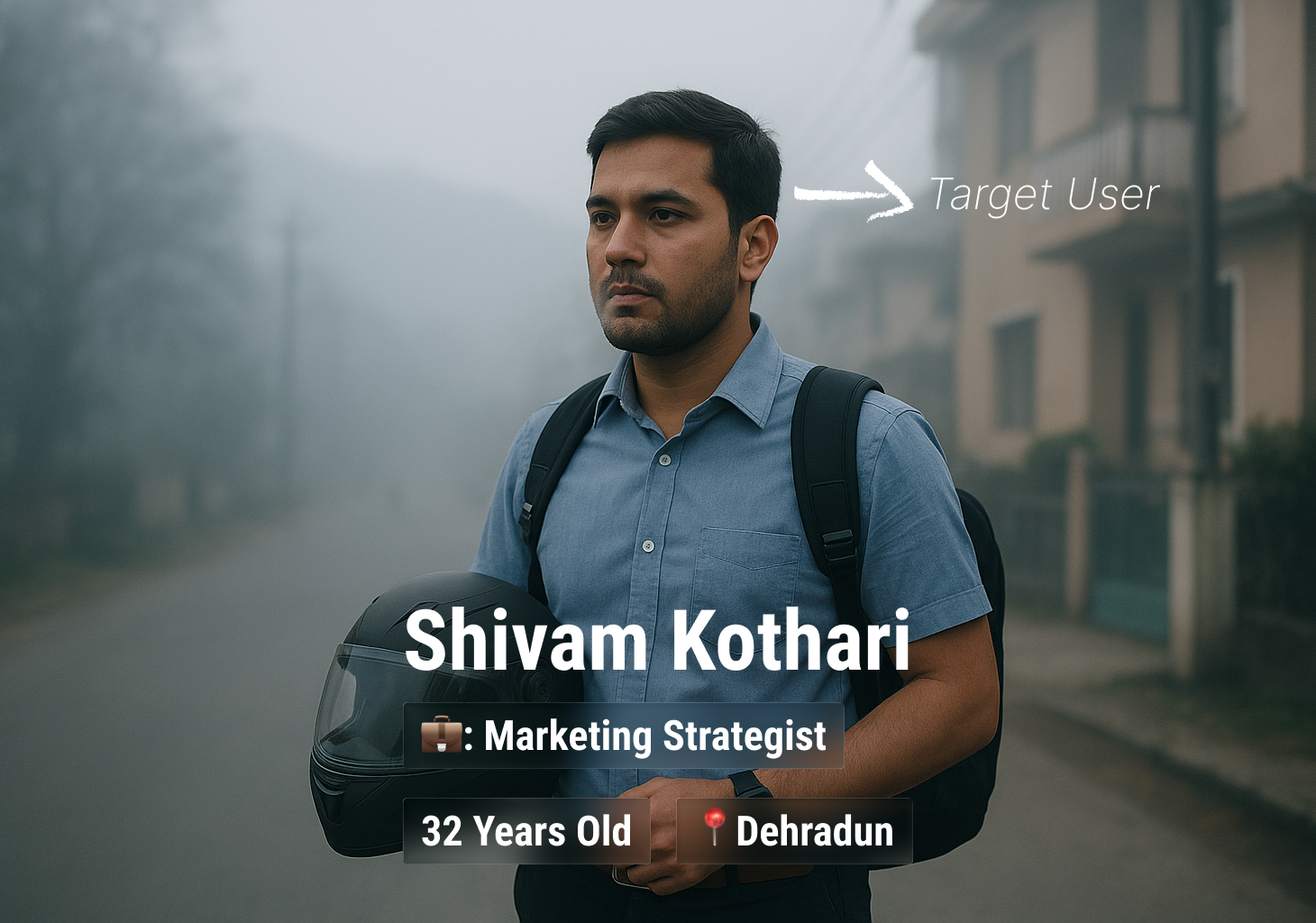
A 32-year-old marketing professional from Dehradun, Shivam is a daily bike commuter who values speed, efficiency, and freedom on the road. But like most urban riders, he often faces unpredictable traffic and blind spots that put him at risk.
Through interviews and field observation, I discovered that daily commuters struggle with
Foggy Visor in Rain: Poor weather instantly reduces vision and increases accident risk.
Blind Spot Collisions: Riders often miss vehicles approaching from behind or the side.
Low Night Visibility: Riders are often not visible to larger vehichles
Problem Statement: Two-wheeler riders face major safety risks from limited visibility — blind spots, low visibility in dark conditions, and visor fogging in humid weather. Current helmets fail to address these issues, highlighting the need for a smart, visibility-first solution for safer everyday commuting.
A problem well put is half solved.
-John Dewey
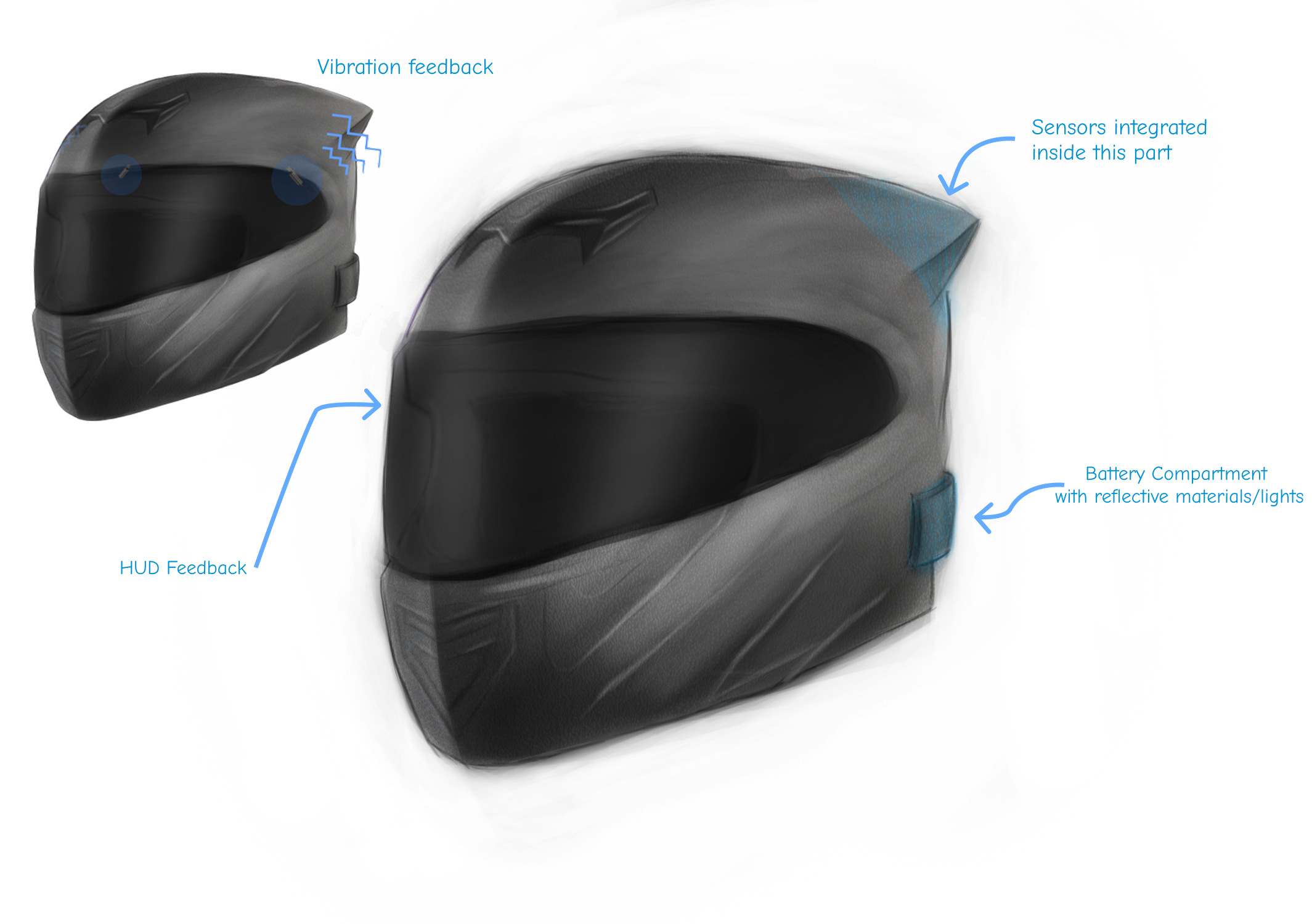
Explored multiple directions for helmet design through quick ideation sketches
Narrowed down and refined the most promising features to move forward with:
1. Blind spot sensors (ultrasonic/radar-based) with multimodal alerts (visual/auditory)
2. Integrated anti-fog visor treatments
3. Reflective and illuminated surface design for night use
.png)
/ˈna-va-roʊ/ noun
A commuter’s helmet reimagined for the modern road. Navaro goes beyond protection—it detects blindspots, enhances awareness, and gives riders the confidence to navigate urban traffic with precision and ease.
.png)
The journey began with a rough prototype — an Arduino board, ultrasonic sensors, vibration motors, and LEDs wired together.
-Though not sleek, it carried the essence of Navaro’s vision: safety through awareness.
-Gentle vibrations on the helmet’s sides acted like whispers — instinctive cues that guided the rider without distraction.
-LEDs offered quick visual confirmation, ensuring no warning went unnoticed.
For now because this was a test version , this version required a usb power source to function since adurino uno is being used in the test version
Integrating the sensors into helmet to make the funtions work.
The visor was treated with hydrophilic surfactants to ensure there minimal fog formation. Especially during rains and cold weather.
The helmet is designed to be context aware. Meaning traffic density and vehicle speed directly impact detection accuracy. To address this, the helmet’s sensors were designed to have a dynamic range that adjusts relative to speed.
1. Broaden real-world testing across varied riding conditions
2. Explore alternative alert mechanisms for better rider feedback
3. Improve durability and battery performance
4. Conduct early user trials with daily commuters
5. Refine form factor for comfort and space effeciency